
Tattnall County Warrant Records
No active warrant list was located on the official Tattnall County website during the research pass. No official sheriff mobile app warrant search was located either. That means the county publishes warrant information indirectly, mainly when a person is already booked into the jail and the roster charge table shows a warrant number. A person not listed in the jail roster may still have a warrant.
The public search path is therefore a fallback chain. Contact the court that likely issued the warrant, contact the Sheriff's Office for execution or surrender logistics, check the jail roster if the person may already be in custody, and check municipal or citation systems if the issue began as a traffic or ordinance case. Sealed warrants and juvenile warrants may not be available to the public.
Important: Do not rely on the jail roster alone when checking warrant status for someone who is not in custody.
Tattnall County Magistrate Warrants
The Tattnall County Chief Magistrate page names John Mock and states that Magistrate Court jurisdiction includes issuance of summons, arrest warrants, and search warrants. Magistrate Court also handles preliminary hearings, county ordinance violations, misdemeanor deposit account fraud, dispossessory writs, and civil claims up to the local jurisdictional limit. For a new arrest or search warrant question, Magistrate Court is often the first court-level source to check.
Magistrate Court is not the only possible issuing court. Georgia state courts can issue search and arrest warrants and can handle misdemeanors and preliminary hearings. Superior Court can be involved when a felony case, probation issue, contempt matter, or domestic order is already in the court record. Municipal courts may handle city traffic and ordinance bench warrants.
The magistrate image comes from the official Chief Magistrate Court page.
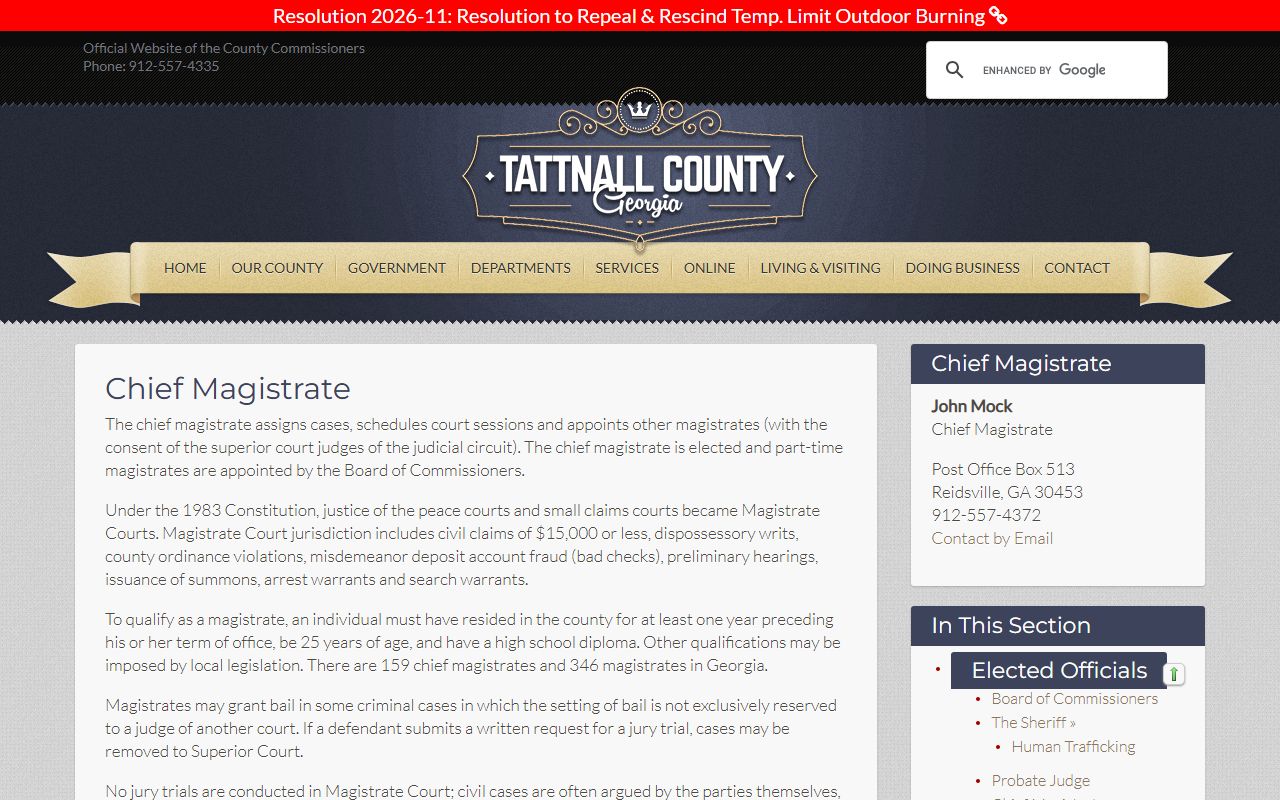
That source is the clearest county page for arrest-warrant and search-warrant issuing authority.
Tattnall County Warrant Channels
The Sheriff's Office executes arrest warrants and serves as an officer of the court. Sheriff Kyle Sapp's office also provides courthouse security, civil process service, levy execution, and jail operations. For a warrant that may require surrender, transport, or bond logistics, the sheriff contact is practical. The official sheriff contact is PO Box 545, Reidsville, GA 30453, phone 912-557-6777 or 912-557-6778, fax 912-557-6728.
| Channel | Use It For | Limit |
|---|---|---|
| Sheriff's Office | Warrant execution, surrender logistics, jail custody, civil process. | May not disclose sealed or restricted information. |
| Magistrate Court | Arrest warrants, search warrants, preliminary matters. | No public online warrant portal was located. |
| State or Superior Court | Misdemeanor, felony, probation, contempt, or case-linked warrants. | Confirm with the clerk or assigned court. |
| Municipal courts | City traffic or ordinance bench warrants. | No Tattnall municipal warrant portal was found. |
| Jail roster | Warrant numbers for people already booked. | Not a full active-warrant list. |
| Open records request | Non-exempt sheriff or court records not online. | Sealed, juvenile, and law-enforcement controlled records may be withheld. |
Check Tattnall County Warrants
A cautious warrant check uses more than one source because Tattnall County does not publish a full active-warrant search. The jail roster can identify warrant numbers for booked people. Magistrate Court can address local arrest or search warrant questions. The Sheriff's Office can discuss surrender and jail logistics. For traffic-related failures to appear, read the citation and contact the issuing city, court, or state citation payment service.
- Check the Tattnall current inmate inquiry if the person may already be in custody.
- Call Magistrate Court for arrest or search warrant questions tied to a preliminary criminal matter.
- Call the Sheriff's Office before any surrender attempt and ask whether bond is set, denied, or must be set by a judge.
- For traffic or ordinance cases, contact the issuing municipal court or use the Georgia ticket locator when the citation points there.
- For a pending criminal case, speak with defense counsel or the Public Defender before appearing in person.
Note: GCIC and NCIC warrant data is law-enforcement controlled, and no public statewide active-warrant search was located in the research.
Tattnall County Warrant Fields
Because the public warrant data found in Tattnall comes through the jail roster, the visible fields are jail-charge fields rather than a standalone active-warrant form. These fields can still be useful. A warrant number can identify the source document, while statute, description, court, and bond help separate the booking charge from later case events.
| Field | Visible? | Notes |
|---|---|---|
| Warrant number | Yes | Examples in research included W26-493-F, B-26-0130-FW, and 2025-R-102RR. |
| Counts | Yes | Shows number of counts tied to the charge row. |
| Statute | Yes | Can show O.C.G.A. style sections, such as 16-5-21 or 42-8-38. |
| Description | Yes | Charge text or wanted-person note. |
| M/F marker | Yes | Felony, misdemeanor, or other marker shown by the roster. |
| Court | Yes | Superior Court and State Court were observed. |
| Bond | Yes at profile level | Total bond, denied, or not set. |
| Issuing judge | No | Not shown in the public roster sample. |
| Status for non-inmates | No | The roster covers booked or recent inmates, not all active warrants. |
Tattnall County Bench Warrants
A bench warrant is often issued after a missed court date or failure to comply with a court order. In traffic cases, the citation controls the court. Tattnall city citations may go to the issuing municipal court, while county or state citations may route to State Court, Probate Court in counties without state court jurisdiction, Magistrate preliminary process, or Georgia State Patrol citation services. If the case began as a traffic ticket, the warrant search should include the traffic court or city named on the ticket.
The traffic image source assigned to the warrant page is the Georgia State Patrol citations page.
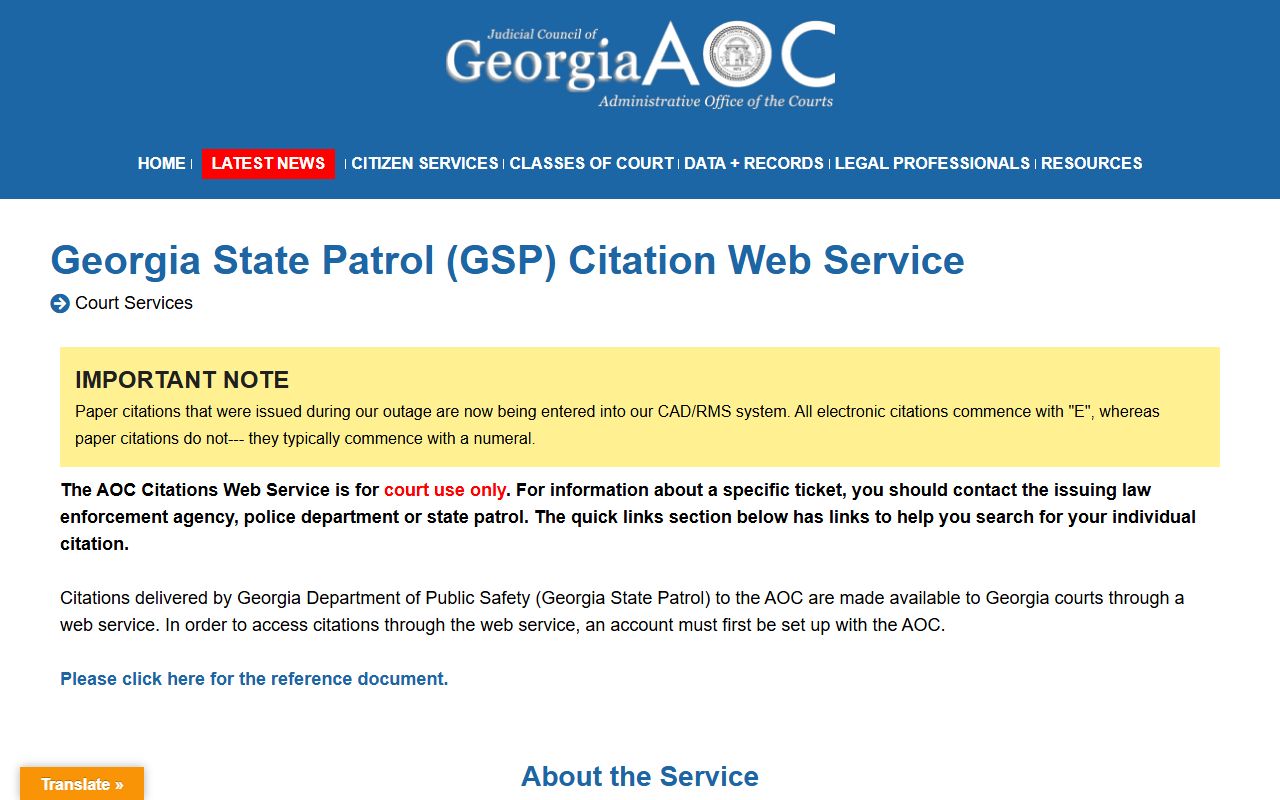
This source supports the traffic-ticket path that can lead to failure-to-appear consequences.
Tattnall County Warrant Lookalikes
Sex offender registry searches and prison offender searches are not warrant searches. They can still be useful when a person appears in a wanted-person or failure-to-register context, but the record source is different. The Georgia Bureau of Investigation operates the state sex offender registry under Georgia law. The Department of Corrections operates the offender search for sentenced state custody.
The local sex offender source is the county Tattnall sex offenders page.
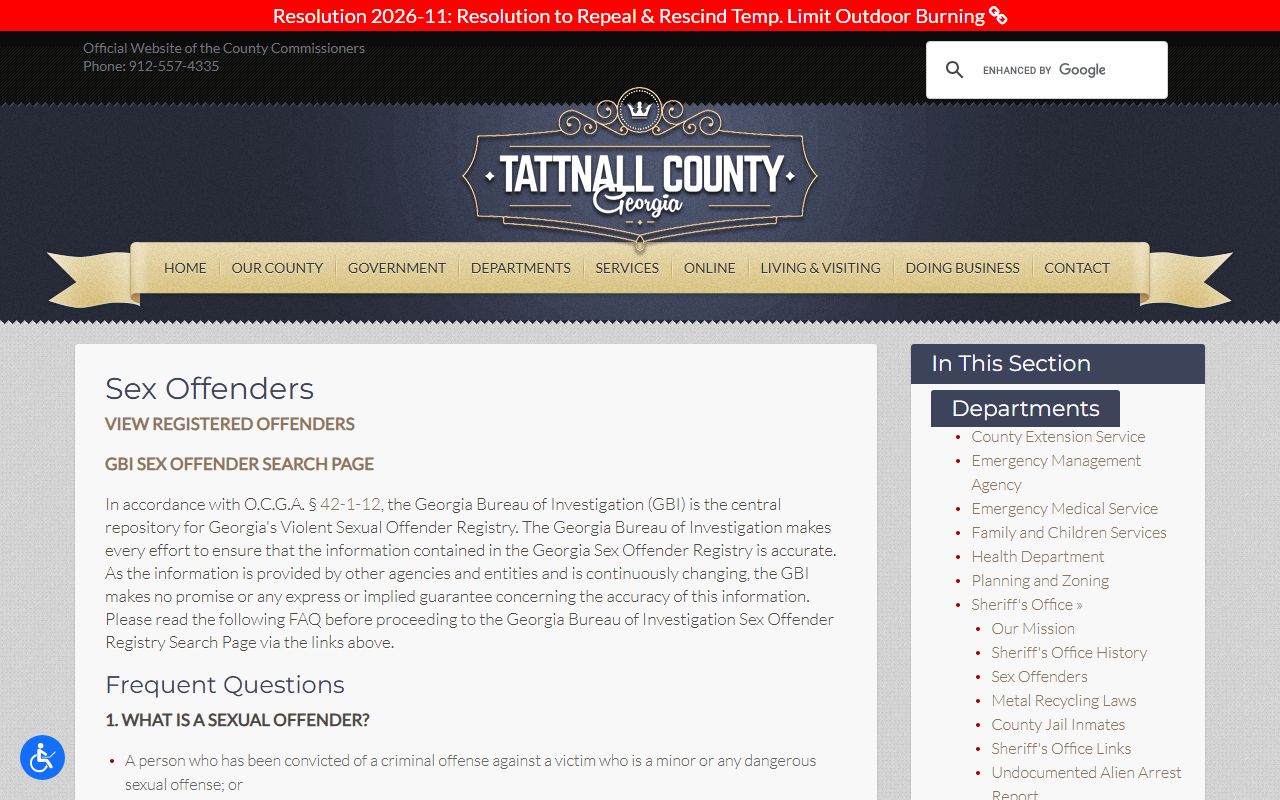
The county page helps route registry questions away from the jail roster and toward the correct public registry.
The state registry source is the GBI sex offender registry information page.
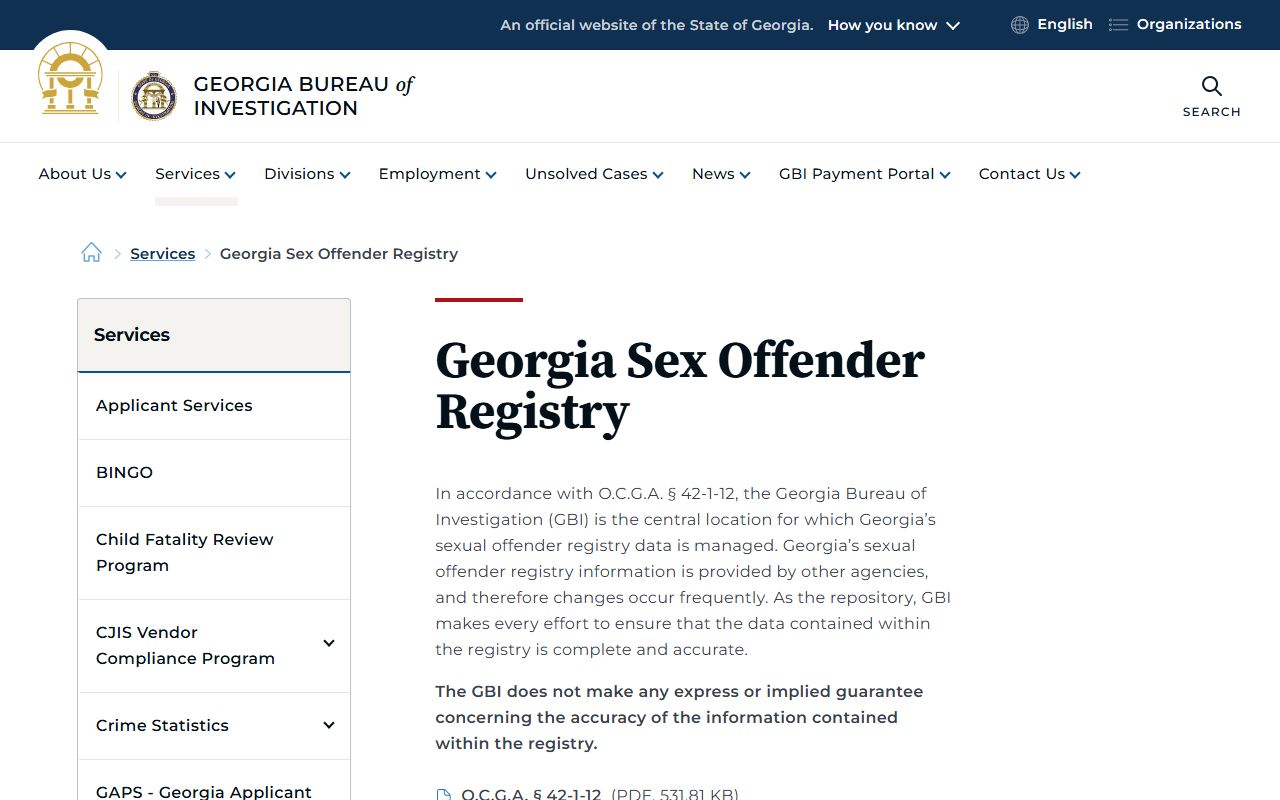
GBI explains the registry source, while warrant status itself remains with courts and law enforcement.
The registry search image comes from the Georgia public sex offender registry search.
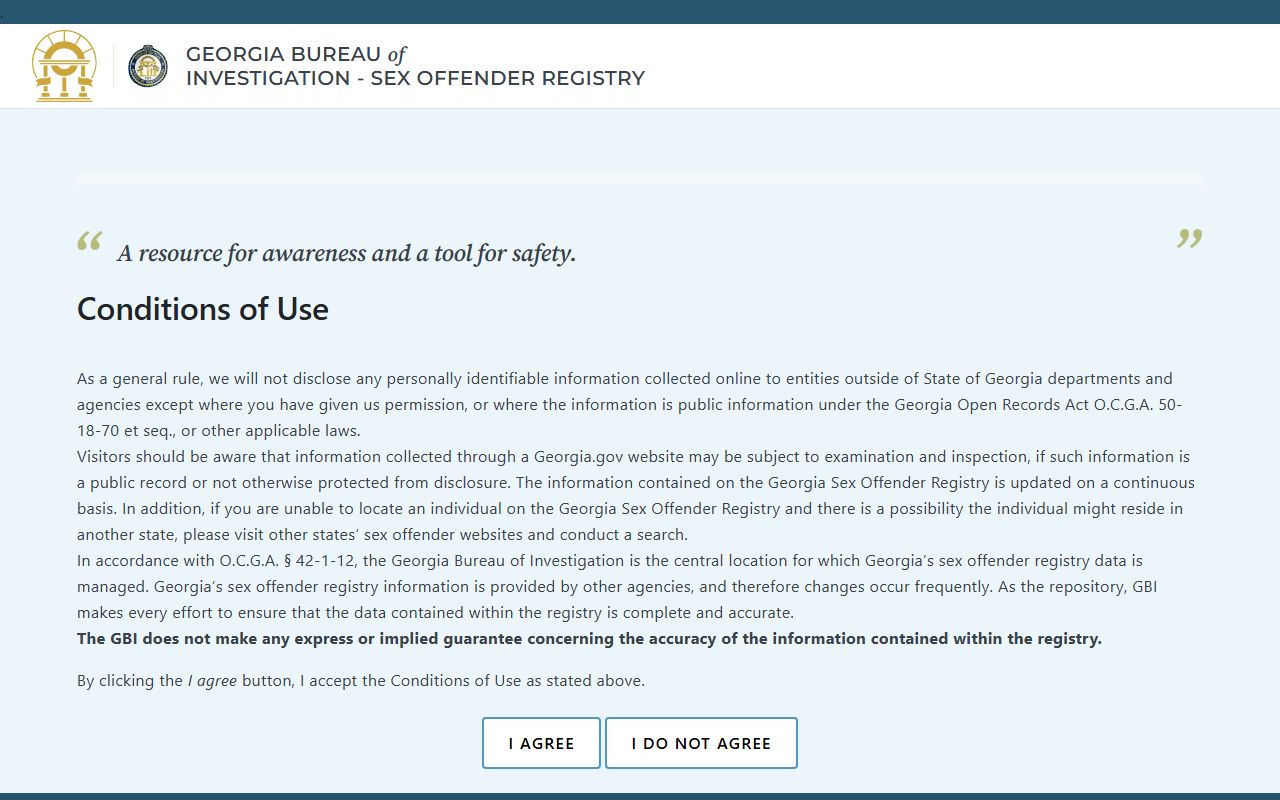
Use that search for registry status, not as proof that an arrest warrant exists or does not exist.
Resolve Tattnall County Warrants
An outstanding warrant should be handled through the court and law enforcement office that can clear it. Do not appear without knowing whether bond is set or whether a judge must review release. If the warrant relates to a pending criminal case, the Tattnall County criminal court records will carry later hearings, pleas, disposition, and sentencing after the case is filed.
- Identify the likely source: Magistrate for new arrest or search warrants, State or Municipal for traffic and misdemeanors, Superior for felony, probation, or contempt matters.
- Call the Sheriff's Office for warrant-execution and surrender logistics.
- Ask whether bond is set, denied, or must be set by a judge.
- Use defense counsel or the Public Defender when the matter is tied to a pending case.
- Appear as directed, post bond if allowed, and keep proof of recall or clearance.
- Follow up with the clerk so the docket reflects the warrant resolution.
The state custody source is the Georgia DOC offender search.
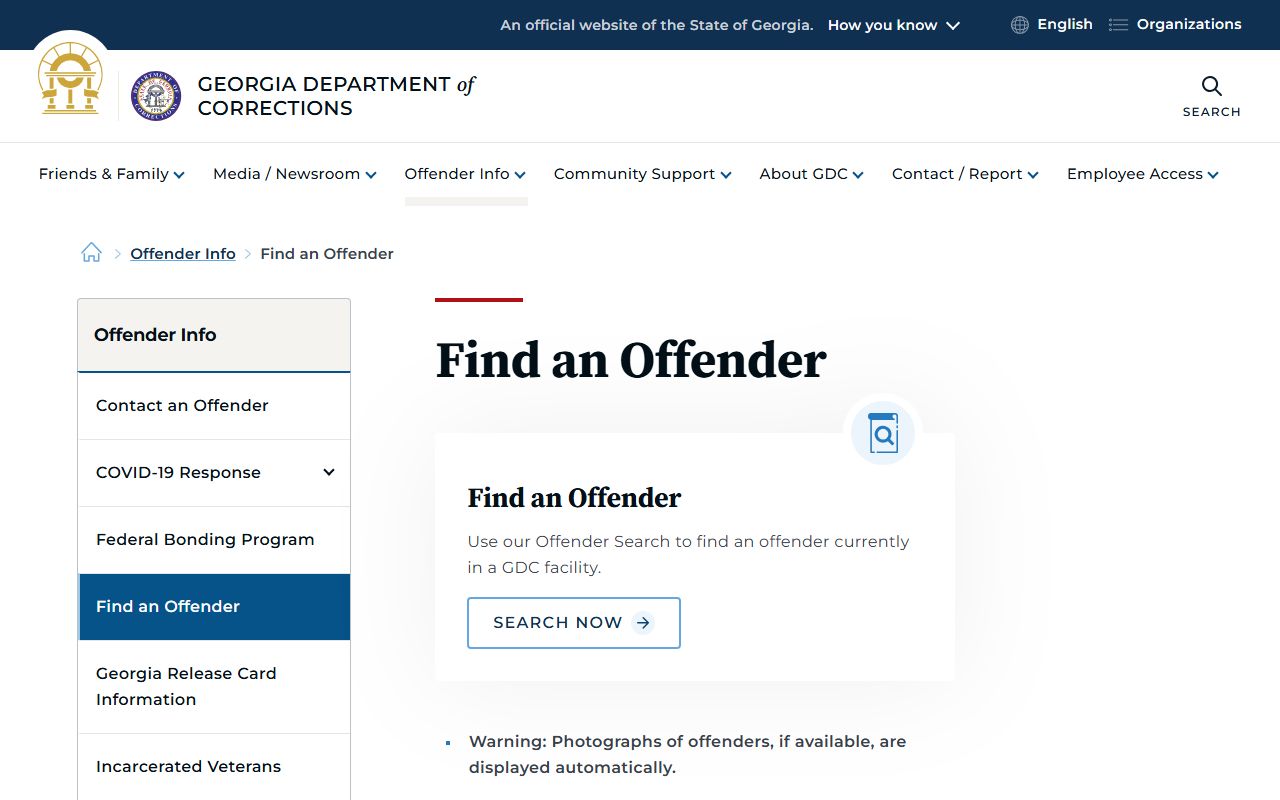
DOC search is a custody fallback after conviction or sentence, not the same thing as an active-warrant lookup.
Restricted Tattnall County Warrants
Some warrant records are not public. Search warrants may remain sealed while an investigation is active. Juvenile warrants and juvenile court files have special limits. Law-enforcement database records are controlled through GCIC, NCIC, and agency systems rather than a public county page. Open records requests can help for non-exempt sheriff or court records, but open records do not replace discovery in a criminal prosecution.
Georgia public-record access is broad, but not absolute. Tattnall County's practical route starts with the record custodian: sheriff for jail and execution records, Magistrate Court for local warrant issuance, Clerk of Superior Court for case-file records, and municipal court or city contact for city bench warrants.
When making a request, use names, dates, warrant numbers, arresting agency, court name, and case number if known. The county's open-records guidance says written requests help clarify scope, and charges may apply before records are processed.
If the warrant is tied to a pending prosecution, ask the court or attorney how discovery rules affect access. Open records can identify public records, but it does not force release of sealed investigative material.