
Search Tattnall County Court Records
Tattnall County does not publish one simple free docket that covers every court record from the county site. The most reliable search path starts with the official custodian. Superior, State, and Juvenile records are managed by the Tattnall County Clerk of Superior Court. Probate files and marriage licenses go to Probate Court. Warrants and small civil matters may start in Magistrate Court. City traffic and ordinance citations can sit with the issuing municipality.
Statewide tools can help, but they do not replace the local office. Georgia Courts provides an E-Access to Court Records path that redirects to a provider and requires an account. The re:SearchGA portal may show participating-county case data after registration. PeachCourt and Odyssey eFileGA are e-filing and document channels, not a guaranteed public archive for each Tattnall County court case.
- Identify the court type first: Superior, State, Juvenile, Probate, Magistrate, Municipal, or federal.
- Gather the party name, case number, court date, citation number, or approximate filing year.
- Contact the Clerk of Superior Court for Superior, State, and Juvenile case files.
- Use the correct fallback office for probate, jail, warrant, traffic, or municipal records.
- Ask for a certified copy when the record will be used for filing, licensing, appeal, or legal proof.
The official Tattnall County homepage is the entry point for county offices and public notices.
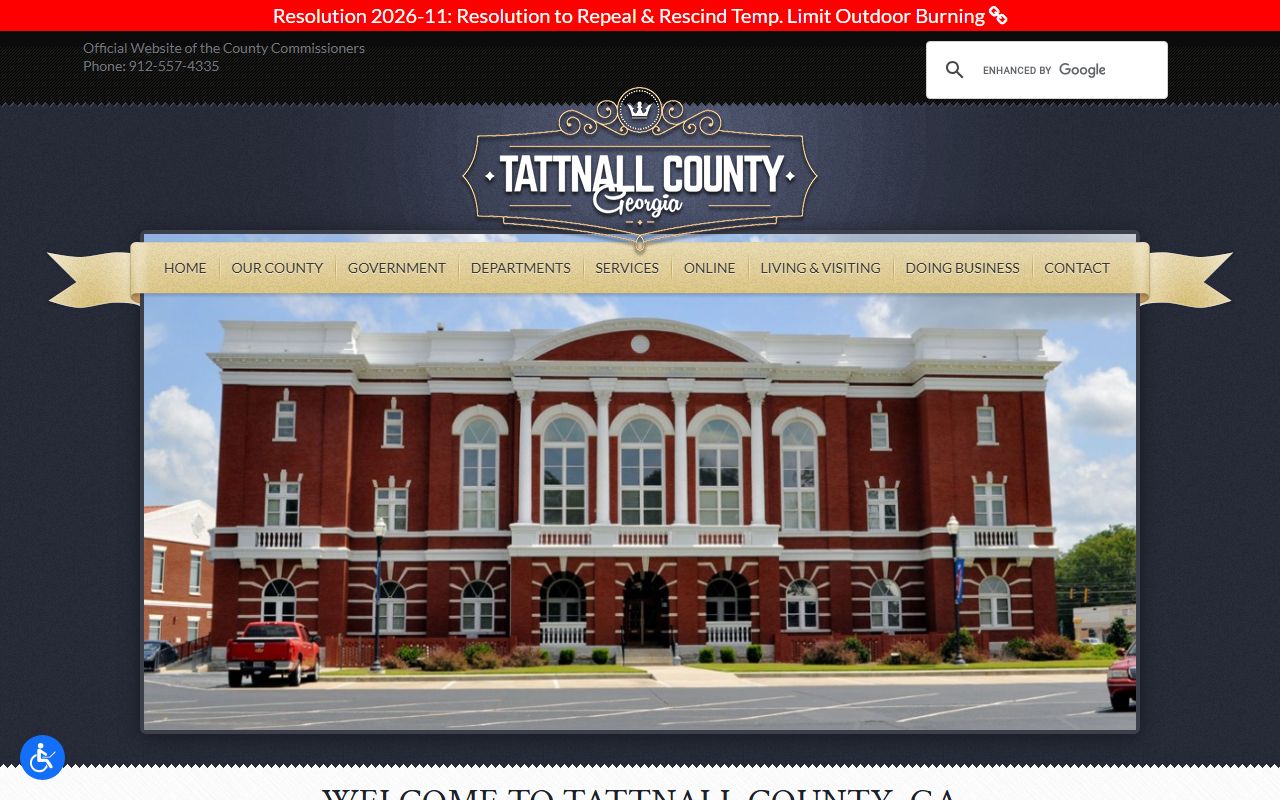
The county homepage is useful because it links court offices, sheriff information, open records, municipalities, and courthouse pages from the same local government source.
Tattnall County Judicial System
Tattnall County is part of Georgia's trial court system. Superior Court is the general jurisdiction court and hears felony trials, divorces, equity matters, title-to-land cases, and appeals from lower courts. State Court can hear misdemeanors, traffic matters, warrants, preliminary hearings, and civil cases where state law gives it authority. Juvenile Court handles child welfare and delinquency matters, with access limits. Probate, Magistrate, and Municipal courts serve narrower roles.
The county is in the Atlantic Judicial Circuit with Bryan, Evans, Liberty, Long, and McIntosh counties. The circuit site lists a Tattnall contact number of 912-557-8686. Judge Glen A. Cheney is shown for Tattnall County, with judicial assistant Tracy Cowart. That circuit link matters for calendars, judges, standing orders, ADR, and Superior Court operations, while the local clerk remains the main record custodian.
Case flow: Magistrate or Municipal Court › State Court or Superior Court › Court of Appeals of Georgia › Supreme Court of Georgia.
| Court | Role | Common Tattnall County records |
|---|---|---|
| Superior Court | General jurisdiction | Felony, divorce, major civil, equity, appeals |
| State Court | Limited county jurisdiction | Misdemeanor, traffic, preliminary matters |
| Probate Court | Estate and vital-record functions | Wills, estates, guardianship, marriage licenses |
| Magistrate Court | Small claims and warrants | Claims up to $15,000, dispossessory, arrest warrants |
| Municipal Court | City cases | City ordinance and city traffic tickets |
Tattnall County Courthouse Offices
The main courthouse address is 111 North Main Street, Reidsville, Georgia 30453. The courthouse square is also tied to several court-related offices, including the Clerk of Superior Court, Probate Judge, Chief Magistrate, county administration, and the ADA coordinator. The county courthouse page describes the 1902 courthouse and its public role in downtown Reidsville.
The Tattnall courthouse history page gives rare building detail for record researchers.
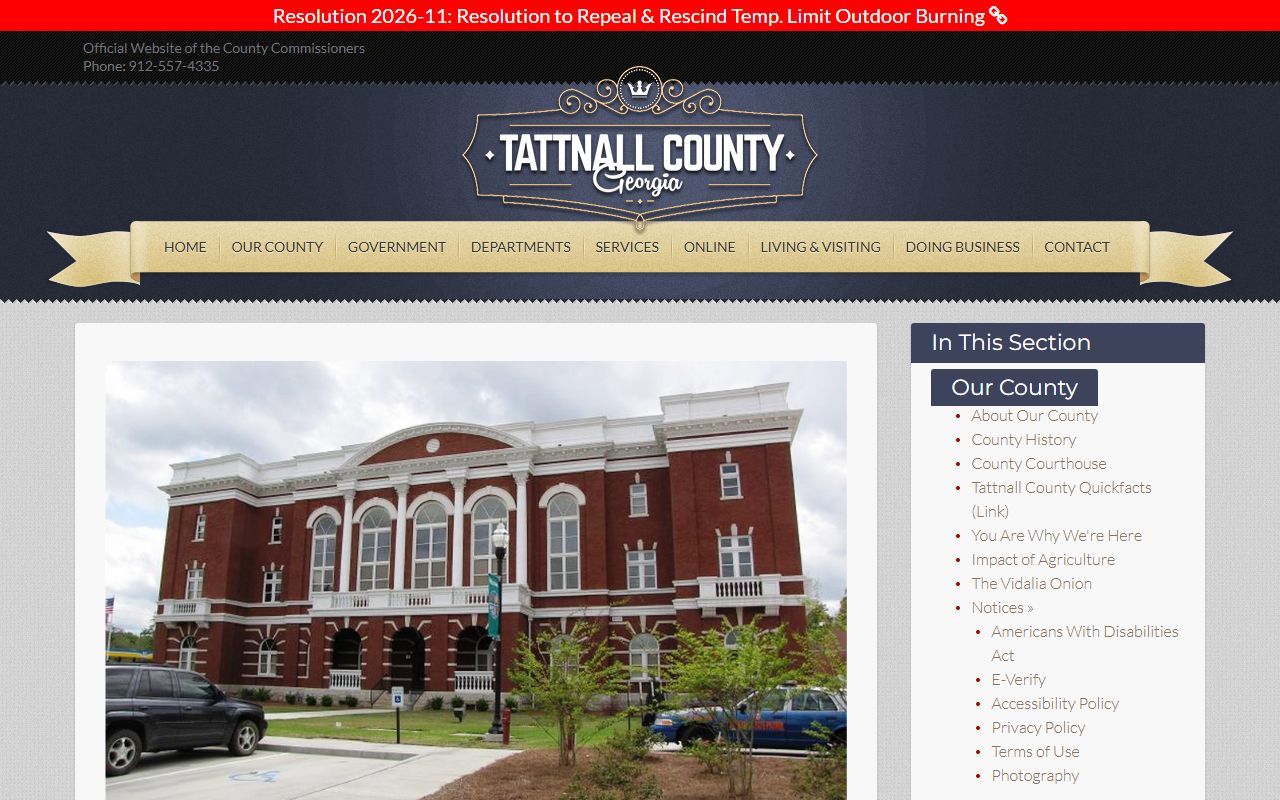
The courthouse history helps explain why older court records may point to archived books, old court offices, or the historic Old Jail archives instead of a modern online search.
Tattnall County Courthouse
111 North Main Street
Reidsville, GA 30453
912-557-4335
Tattnall County Court Record Types
Court records in Tattnall County depend on both subject matter and stage of the case. Civil files may include complaints, answers, service returns, motions, orders, judgments, garnishments, liens, and appeal notices. Criminal files can include charging documents, pleas, hearings, motions, verdicts, dispositions, and sentences. Domestic cases include divorce filings and final decrees, but child, adoption, and protected-identifier details may be sealed or redacted.
The county's court-record picture is broader than Superior Court alone. Magistrate Court has claims, dispossessory cases, county ordinance issues, bad checks, preliminary hearings, and warrants. Probate Court has estate and guardianship files, wills, oaths, and marriage licenses. Traffic cases may be in a municipal, state, probate, magistrate, or Georgia State Patrol payment path based on the ticket.
- Civil records include lawsuits, judgments, garnishments, appeals, and service entries.
- Criminal records include charges, pleas, motions, dispositions, sentence orders, and probation details.
- Family records include divorce and domestic dockets maintained by the Clerk of Superior Court.
- Probate records include wills, estates, guardianship, conservatorship, and marriage license records.
- Traffic records include citation, plea, fine, disposition, and failure-to-appear data.
The county overview page gives local context on routes, towns, and public offices that shape where court users go.
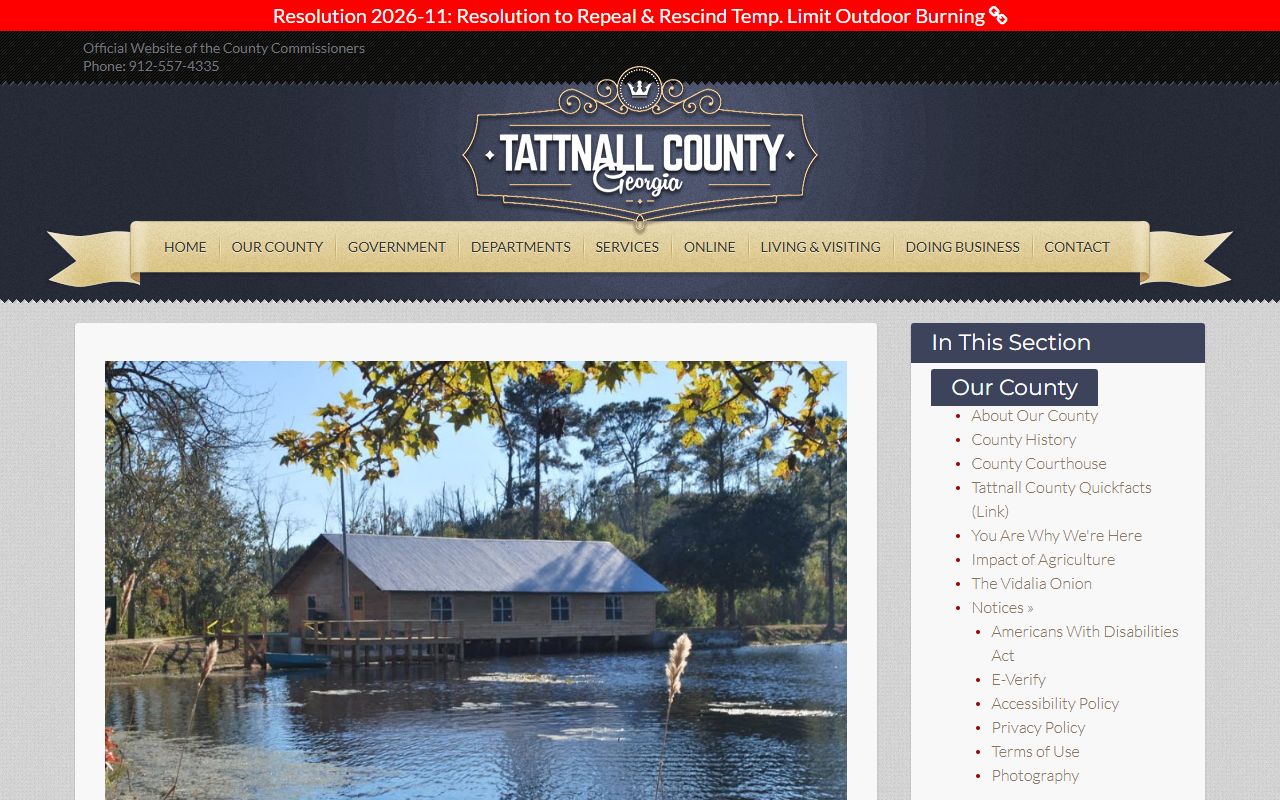
That local context is useful for traffic cases and municipal matters because Cobbtown, Collins, Glennville, Manassas, and Reidsville may be involved in city-level records.
What Tattnall Court Records Show
A Tattnall County court record can show basic case identity, parties, filings, calendar entries, orders, and outcome data. Criminal and jail-linked records add warrant numbers, statutes, count numbers, felony or misdemeanor markers, arresting agency, bond, court name, and charge descriptions. Civil and probate records add petition details, judgments, inventories, letters, guardianship orders, and accounting entries.
| Field | What it shows |
|---|---|
| Case or warrant number | The clerk, court, or sheriff identifier used to track the matter. |
| Parties | Defendant, plaintiff, petitioner, respondent, inmate, attorneys, or agency. |
| Filing or arrest date | When the case, citation, warrant, or custody event began. |
| Charge or claim | The statute, ordinance, complaint, petition, or cause of action. |
| Disposition | The final or current outcome, such as judgment, dismissal, plea, or sentence. |
| Financial terms | Fine, court cost, bond, restitution, fee, judgment amount, or copy charge. |
Tattnall Court Record Access Laws
Georgia's access rule starts with the custodian. For Tattnall County court records, that usually means the Clerk of Superior Court, Probate Court, Magistrate Court, a municipal court, or the Sheriff's Office for jail records. The Tattnall open-records page says requests should go directly to the custodian and may be oral or written, though a written request is better for dates, names, case numbers, and cost estimates.
The county says charges may apply and that the requester will be contacted before processing if costs are incurred. It also warns that defendants or lawyers seeking information in a pending criminal case may need to contact the Clerk of Superior Court and use discovery motions instead of a general public-records request.
Key statutes:
O.C.G.A. 50-18-70 et seq. treats Georgia public records as requestable unless a law or court order restricts them.
O.C.G.A. 50-18-71 governs inspection, copies, and allowed costs under the Open Records Act.
O.C.G.A. 35-3-37 controls many Georgia criminal history record restriction requests.
The county open-records instructions are a useful fallback when no online court record search is available.
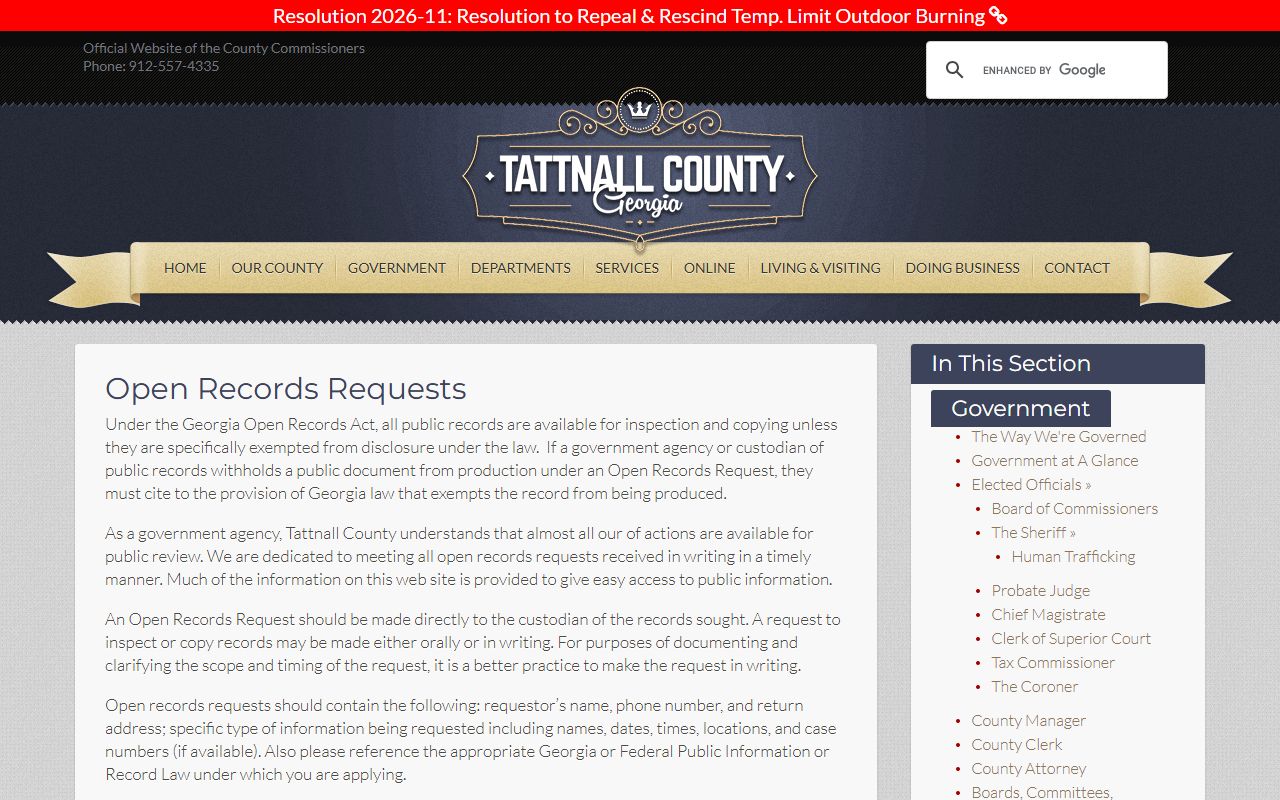
That request page is most useful when the needed record belongs to a county office, but case-file requests still work best when sent to the specific court custodian.
Restricted Tattnall County Records
Not every court record is open for ordinary public review. Juvenile records, adoption files, mental health proceedings, and protected family or personal identifiers have special limits. Uniform Superior Court Rule 21.6 and O.C.G.A. 9-11-7.1 protect sensitive identifiers in many filings, so public copies may omit Social Security numbers, financial account details, and family-violence or stalking information.
Georgia uses the term record restriction for many criminal history limits. For arrests after July 1, 2013, GBI says the person usually contacts the prosecutor. For older arrests, the process starts with the arresting agency. A restricted GCIC criminal history and a sealed court file are related but not identical, so both the prosecutor and the court clerk may matter.
Tattnall County Sheriff and Jail
Sheriff Kyle Sapp is the county sheriff. The Sheriff's Office handles patrol, court services, detention, criminal investigations, administration, civil process, levies, courtroom security, and warrant execution. Jail information is public in part through the county's inmate gateway and current inmate inquiry, but the county has not published a full active warrant list or a sheriff mobile app in the official sources reviewed.
For custody status, the Tattnall County inmate records page should start with the official jail roster. The roster shows current inmates, 24-hour arrests, inmates by arrest date, name filters, profile data, charges, courts, statutes, warrants, and total bond. The Sheriff's Office can also be reached at 912-557-6777 or 912-557-6778 for jail and warrant logistics.
Tattnall Marriage Divorce Probate
Marriage licenses are issued by Tattnall County Probate Court. Georgia DPH lists the county Probate Court at 111 North Main Street in Reidsville with phone 912-557-6719. Certified state marriage records can also be requested through Georgia vital-record channels, with a $10 first-copy fee and $5 additional copies listed by Georgia.gov. Divorce is different. Georgia divorce cases are filed in Superior Court, so certified divorce decrees should be requested from the Clerk of Superior Court.
Probate Court handles wills, estate administration, guardianship, conservatorship, involuntary hospitalization matters, marriage licenses, and oaths. Older marriage, probate, and court records may also require the Tattnall Archives, which is located in the historic Old Jail on the courthouse square.
- Executor
- The person named to administer an estate under a will.
- Intestate
- A death without a valid will, handled under Georgia inheritance rules.
- Conservatorship
- Court-supervised authority over another person's finances.
Tattnall County Court Record Fees
Not all Tattnall County court-record fees were published in the official sources reviewed. The Clerk of Superior Court says most court records may be viewed in the clerk's office, and the county open-records page says charges may be incurred. When charges apply, the county says the requester will be contacted before processing. For certified copies, call the office that keeps the record before mailing payment.
| Item | Amount or rule |
|---|---|
| Court-record inspection | Most court records may be viewed in the Clerk of Superior Court office. |
| Plain or certified court copies | Tattnall-specific fee not located. Call 912-557-6716. |
| Open records copies or staff time | Charges may apply, with county contact before processing. |
| State marriage certified copy | $10 first copy, $5 each additional copy. |
| Superior Court cost schedule | Statewide cost schedule is published by Superior Court Clerks of Georgia. |
Read Tattnall Court Records
Several terms appear often in court records. A docket is the chronological list of filings and events. A disposition is the current or final outcome. A motion asks the court for a ruling. A plea is the defendant's formal answer to a criminal charge. A bond is security for release while a case is pending. A warrant is a judge-issued order authorizing arrest, search, or another court action.
Charges are not convictions. A jail roster charge row can show what a person was booked on, which statute is cited, what court is listed, and whether bond is set. The final case record may later show an amended charge, dismissed count, plea, acquittal, conviction, or sentence. Confirm the final outcome with the court clerk or prosecutor.
Tattnall County Court History
Tattnall County was created in 1801 from Montgomery County lands. Early county business was ordered to take place at Zacharia Cox's home near Drake's Ferry on the Ohoopee River. A log cabin courthouse followed in 1807 or 1808. Reidsville became the county seat name after the first post office was established in 1832.
The current courthouse was built in 1902 in Second Empire style by architect J.W. Golucke. It was remodeled in 1915 and again in the 1960s, when the tower and mansard roof were removed. A 1991 renovation preserved the building for modern county use. The county history page provides the early courthouse timeline.
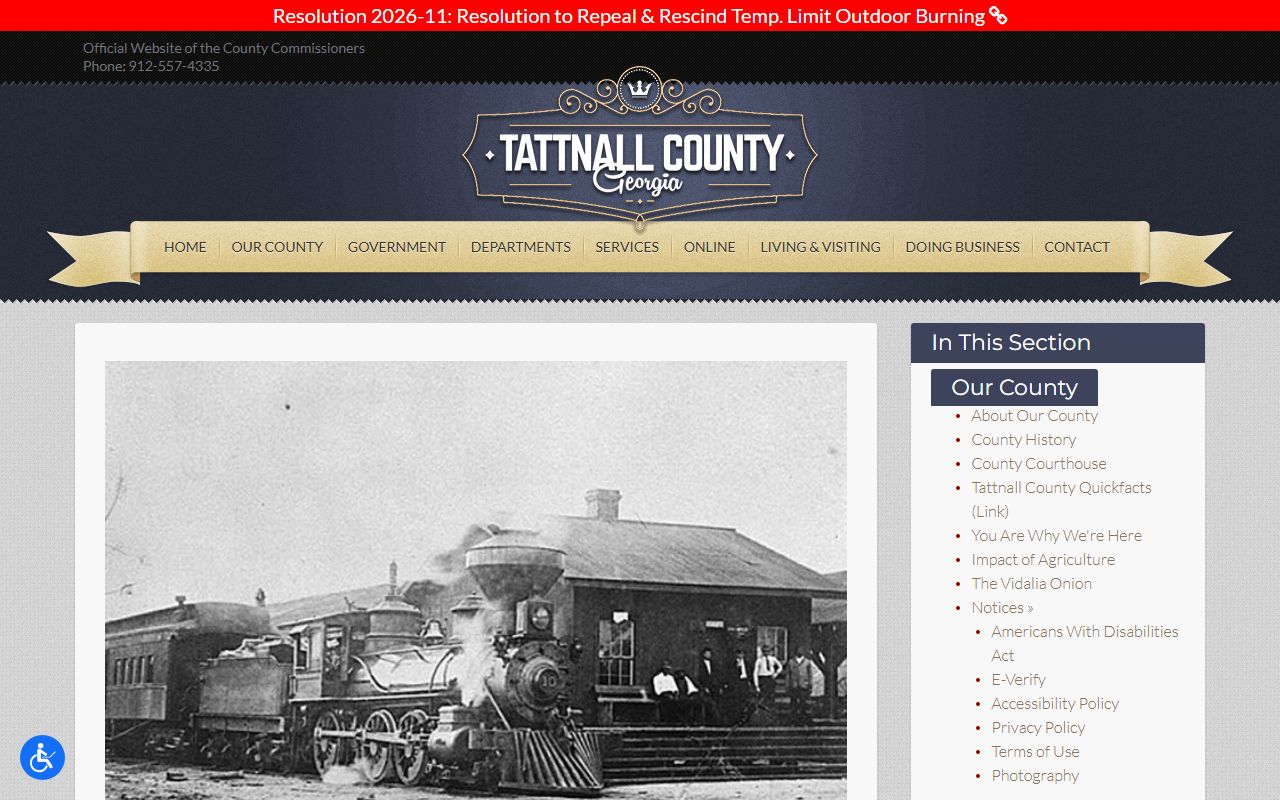
This history points researchers toward the Tattnall Archives when a modern clerk search does not reach older Superior, Probate, City, County, or other court records.
Tattnall County Municipal Records
Tattnall County lists Cobbtown, Collins, Glennville, Manassas, and Reidsville as municipalities. Municipal courts can matter for city ordinance cases and city traffic tickets, especially when a citation was issued by a city officer. The county research did not locate official municipal court lookup links, so a city citation should be matched to the court or city listed on the ticket.
The official municipalities page lists the local city contacts.
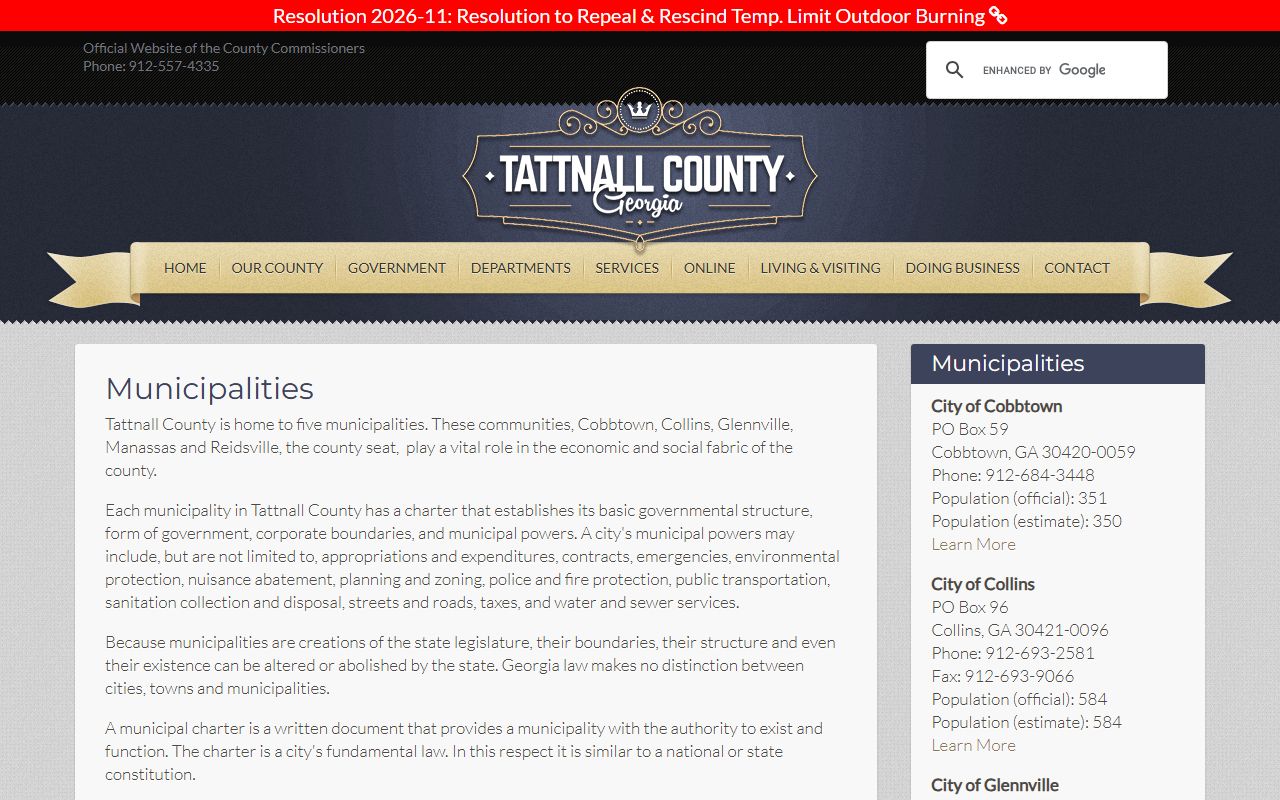
Those city contacts help when a record is not with the Clerk of Superior Court because the matter began as a city citation, local ordinance case, or municipal payment issue.
Tattnall County Court Access
Tattnall County's ADA notice says the county provides appropriate aids and services for effective communication, including interpreters, Braille documents, and other accessible communications. The county asks people to contact the ADA coordinator as soon as possible and no later than 48 hours before a scheduled event. Service animals are welcomed in county offices even where pets are not allowed.
The county ADA notice gives the accommodation path for county offices and court-related visits.
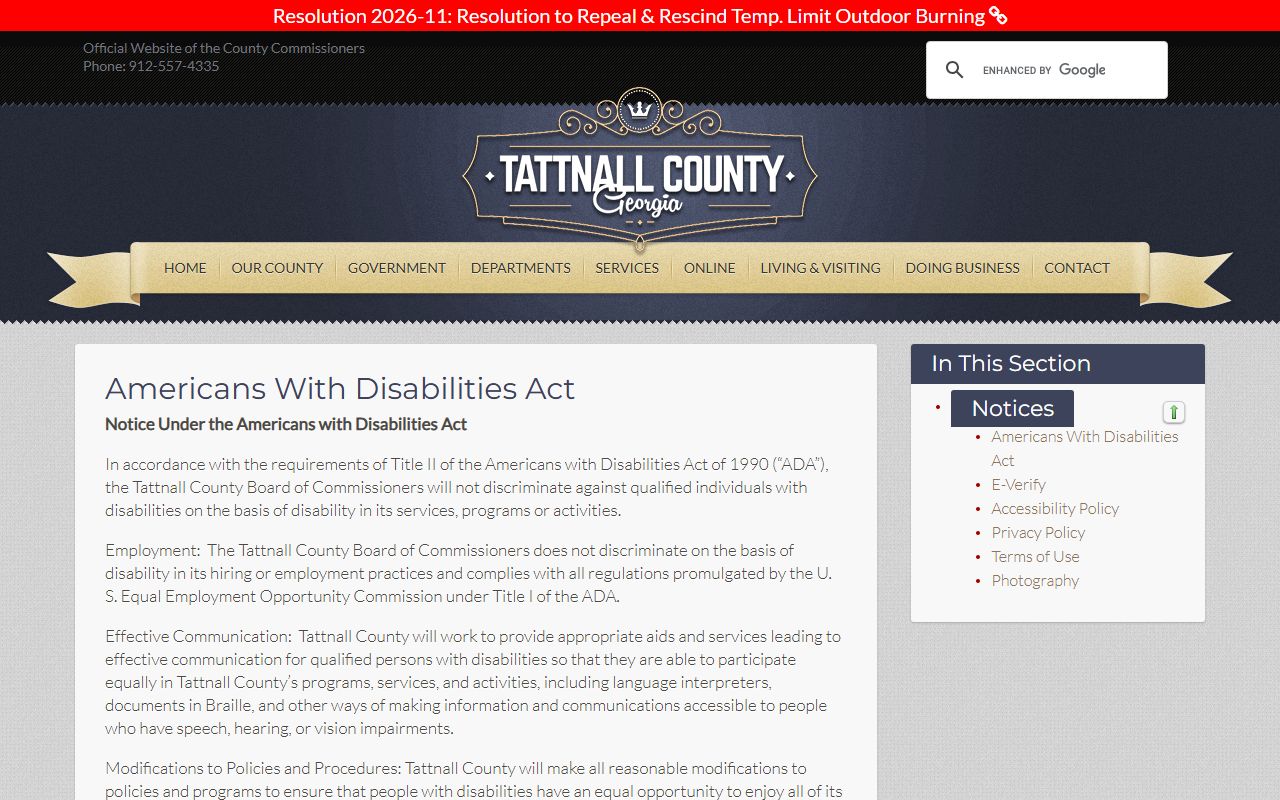
ADA planning is part of practical record access because clerk visits, probate appointments, hearings, and court-copy requests may require communication help or entry coordination.
Tattnall County Court Records FAQ
Where are Tattnall County court records kept?
Superior, State, and Juvenile records are kept through the Clerk of Superior Court. Probate records are kept by Probate Court. Magistrate matters start with Magistrate Court, and city tickets may be held by the issuing municipal court.
Is there a free Tattnall County case search?
No official countywide free civil and criminal docket was located in the research sources. Georgia e-access and re:SearchGA may help, but the local clerk or court remains the official custodian.
How are Tattnall County inmate records searched?
The county links to a current inmate inquiry after a disclaimer page. The roster shows current inmates, 24-hour arrests, inmates by arrest date, name filtering, charge rows, court names, warrant numbers, and bond data.
Where are divorce records in Tattnall County?
Divorce cases are filed in Superior Court in Georgia. In Tattnall County, certified divorce decrees should be requested from the Clerk of Superior Court with party names and case details if known.