
Tattnall County Criminal Court Records
A criminal court record begins when a criminal matter is filed in court. The Clerk of Superior Court is the primary custodian for Superior, State, and Juvenile records in Tattnall, while the court level depends on the charge and stage. Superior Court hears felony trials and can handle probation matters, divorce contempt, and appeals from lower courts. State Court can handle misdemeanors and traffic matters where active. Magistrate Court handles arrest warrants, search warrants, preliminary hearings, summons, and first-stage criminal process. Juvenile records are managed by the Clerk but are restricted in many public-access settings.
The case file is broader than a charge row. It can include the accusation or indictment, arraignment, plea, motions, orders, hearing entries, bond, disposition, and sentence. Jail roster charge information may be the fastest online clue after an arrest, but the full court case and outcome should be confirmed through the Clerk or prosecutor. A closer discussion of filed charges appears in Tattnall County arrest records and court charges.
Criminal record routing also depends on time. A person just arrested may have roster data but no full filed case yet. A case after accusation or indictment should have court records. A sentenced state-prison case may also appear in Georgia Department of Corrections systems, while the original conviction still belongs in the trial-court record. A wanted-person row or probation-violation entry may point back to another court, another county, or a prior sentence.
The Atlantic Judicial Circuit District Attorney site is the prosecutor source for felony criminal work across Tattnall and the other circuit counties.

The DA source matters because charges can be pursued, amended, or dismissed through prosecutorial decisions before final court disposition.
Search Tattnall County Criminal Court Records
No official research source confirmed a single free Tattnall criminal docket portal. Start with the Clerk of Superior Court for filed Superior, State, and Juvenile criminal case records. If the matter is still at warrant, first appearance, or preliminary-hearing stage, Magistrate Court may hold key docket activity. If the person is currently in jail, the official inmate inquiry may show charge rows, warrant numbers, bond, court, arresting agency, and arrest date, but that roster is not the final criminal case file.
- Use the defendant's full name, case number if known, arrest date, charge, and court from any paperwork.
- Check Georgia court provider systems if the criminal case may be indexed through a participating portal.
- Contact the Clerk of Superior Court for filed Superior, State, and Juvenile criminal case records.
- Contact Magistrate Court for warrant or preliminary-hearing matters that have not become a full trial-court case.
- Request certified copies from the custodian when the docket or online charge row is not enough.
The DA team page identifies Billy Joe Nelson Jr. as District Attorney for the Atlantic Judicial Circuit.
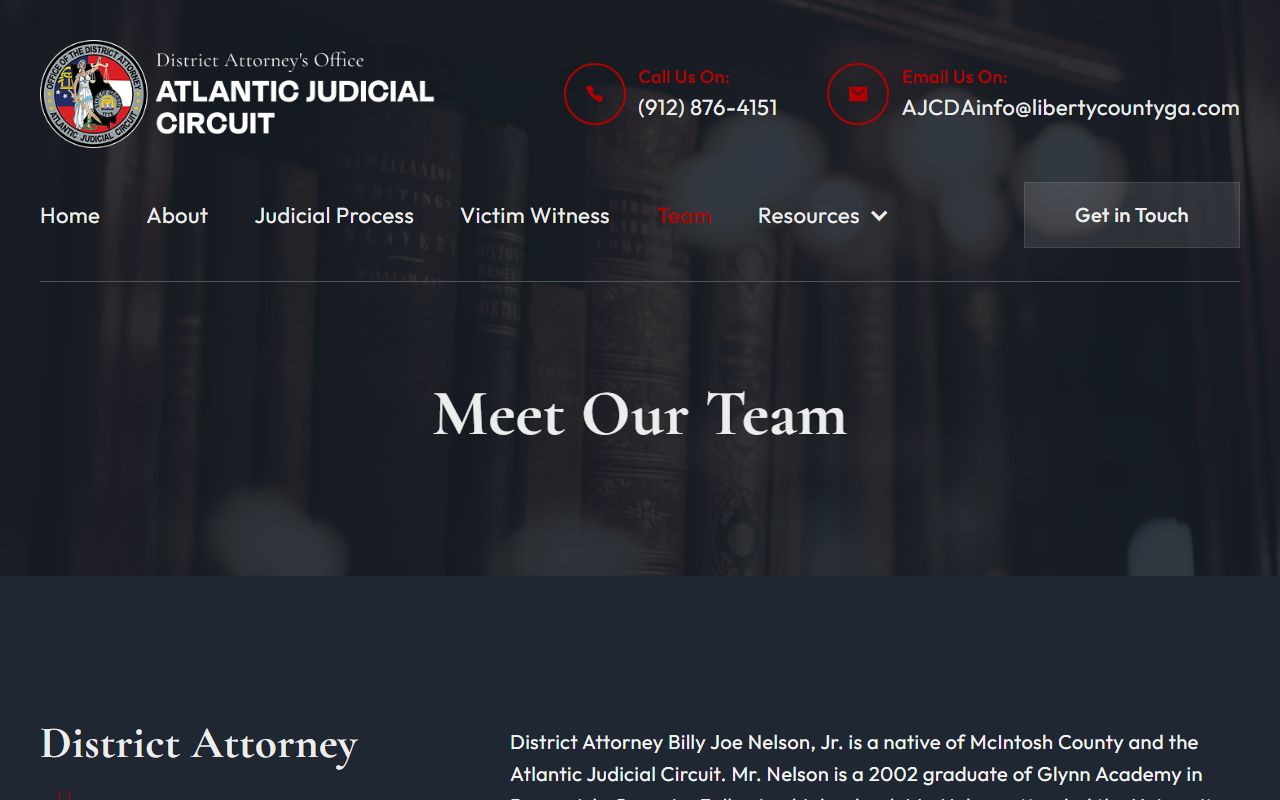
That office is a key source when a criminal court record question turns on charging decisions rather than clerk indexing alone.
Tattnall County Criminal Case Stages
A criminal case moves in stages, and each stage can leave a docket entry or document in the court record. The earliest court activity may be a warrant, first appearance, or preliminary hearing in Magistrate Court. Once formal charges are filed in the trial court, the record can show arraignment, plea, motions, hearings, continuances, trial or plea, disposition, and sentencing. The court record should be read in sequence because charge language and case status can change over time.
Case flow: Charges Filed › Arraignment › Pretrial / Motions › Plea or Trial › Disposition › Sentencing
| Stage | What Happens |
|---|---|
| Charges filed | A complaint, accusation, or indictment states the criminal counts sent into court. |
| Arraignment | The defendant is formally advised of the charges and enters a plea. |
| Pretrial and motions | Attorneys request rulings, discovery may be exchanged, and hearings may be set. |
| Plea or trial | The case resolves by plea agreement, bench trial, jury trial, dismissal, or other ruling. |
| Disposition and sentencing | The record states the outcome and any jail, prison, probation, fine, bond, or other condition. |
What Tattnall Criminal Records Show
A Tattnall criminal court record can combine court identity, charge identity, party identity, financial fields, and final status. Jail roster fields observed in the research included warrant number, counts, statute, description, felony or misdemeanor marker, court, arresting agency, arrest date, days in jail, and total bond. The court case file adds the formal prosecution record: accusation or indictment, pleas, motions, orders, hearing events, disposition, sentence, probation, and appeal activity.
| Field | What It Shows |
|---|---|
| Case number | The court file number used by the Clerk or trial court. |
| Defendant | The person charged in the criminal case. |
| Charges | The count, statute, description, and felony or misdemeanor marker when shown. |
| Plea | The defendant's formal answer, such as guilty, not guilty, or nolo contendere if entered. |
| Motions and orders | Requests for court action and the judge's rulings. |
| Disposition | The outcome, such as conviction, dismissal, acquittal, nolle prosequi, or other status. |
| Sentence | Jail, prison, probation, fine, restitution, or other terms after conviction. |
Tattnall Charges vs Convictions
A charge is not a conviction. A criminal court record can show charges that were filed and later amended, reduced, dismissed, or not proved at trial. The DA FAQ says crimes are first reported to law enforcement, and the office pursues, amends, or dismisses charges based on facts and circumstances rather than individual request. The conviction is the final result only if a plea or verdict establishes guilt and the court enters that outcome.
| Charge | Conviction | |
|---|---|---|
| Stage | Accusation filed or listed in a case. | Outcome after guilty plea, verdict, or accepted plea. |
| Meaning | Shows what the state alleges. | Shows the court found or accepted guilt. |
| Record status | May be pending, amended, reduced, dropped, or dismissed. | Usually tied to sentencing and final disposition. |
The District Attorney FAQ explains the office's felony prosecution role and how charging issues start with law enforcement reports.
That source supports the difference between a public charge entry and the final disposition in the court file.
Read Tattnall Criminal Dispositions
Disposition language should be read carefully. Guilty usually means guilt was found or admitted. Not guilty may refer to a verdict or plea depending on context. Dismissed means the charge or case ended without conviction on that count. Nolle prosequi means the prosecutor declined to continue that charge. Probation violation, child-support lockup order, wanted-person entry, or out-of-county warrant language can appear in jail records and may not tell the full Tattnall case outcome.
Sentencing information can include jail, prison, probation, fines, restitution, bond conditions, or other court orders. The public docket may show only the event label, while the sentencing order gives the legal terms. If the record will be used for court, licensing, immigration, or employment screening, request the certified disposition or sentencing document from the proper custodian.
Probation entries deserve extra care. A probation violation may appear as a new jail booking, a warrant, or a court event even though it relates to an older case. The charge label alone may not show the original conviction, the alleged violation, or the final revocation decision. The safer reading is to pair the jail or warrant entry with the original court case docket and the newest disposition order.
Sealed and Restricted Criminal Records
Georgia uses record restriction for many expungement-style limits on criminal-history dissemination. The GBI summary says arrests after July 1, 2013 generally require contact with the prosecutor for restriction, while older arrests start with the arresting agency. Court sealing and criminal-history restriction are related but not identical. A GCIC or GBI restriction may limit criminal-history access for non-criminal-justice purposes, while court-file sealing may need a court order or rule-based treatment.
| Sealed Court Record | Restricted Criminal History | |
|---|---|---|
| Source | Court rule, statute, or judge's order. | Georgia criminal-history restriction process. |
| Effect | Limits public access to the court file or protected pages. | Limits dissemination of qualifying arrest history. |
| Starting point | Clerk or court handling the file. | Prosecutor for newer arrests, arresting agency for older arrests. |
Public Access to Tattnall Criminal Records
Criminal court records are generally public unless sealed, restricted, juvenile, or otherwise protected. The Georgia Open Records Act, O.C.G.A. 50-18-70 et seq., supports access to public records, and the county says requests should be made directly to the custodian. For a Tattnall criminal court case, that often means the Clerk of Superior Court, Magistrate Court for warrant or preliminary process, or the prosecutor for charge-stage questions. Pending prosecutions may require discovery motions rather than ordinary open-records requests.
Victim-related services can also affect how people interact with criminal cases. The DA victim-witness services page describes help for victims, survivors, and witnesses who are part of prosecuted cases.
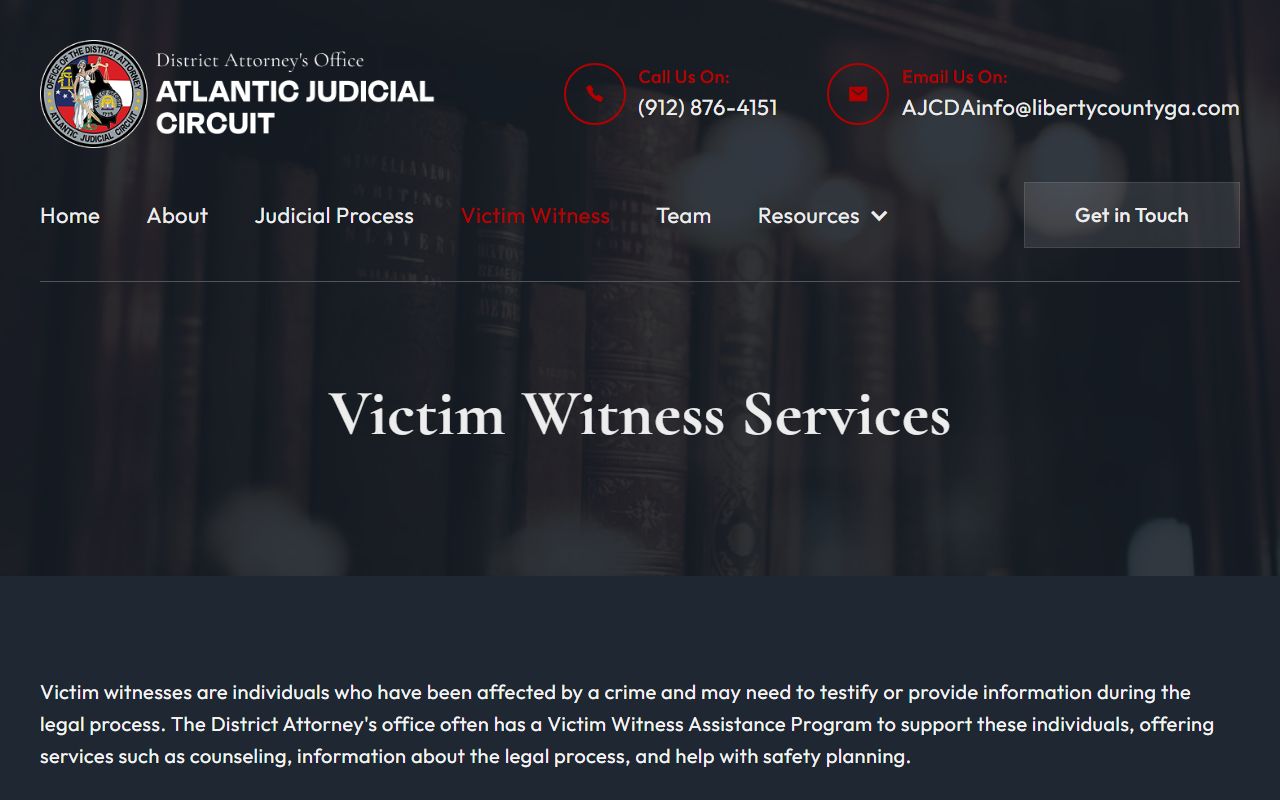
Victim-service information is not a docket substitute, but it is part of the official criminal case support structure for the circuit.
The DA child support division page shows another prosecutor-adjacent function that can intersect with court orders and enforcement.

Child-support enforcement records should be read through their own court and agency context rather than treated as ordinary felony case records.
Tattnall Criminal Record Help
The Georgia Public Defender Council Atlantic Circuit office is the indigent-defense path for eligible defendants. The main office is in Hinesville, and the Tattnall satellite office is at 108 W. Brazell Street, Suite 321, Reidsville, with phone 912-557-4426. Defense counsel can help a defendant understand pending charges, discovery, bond conditions, pleas, sentencing, and whether a record restriction request is available after a qualifying outcome.
The Prosecuting Attorneys' Council Tattnall lookup lists District Attorney Billy Joe Nelson Jr. and Solicitor-General Joe Skeens for prosecutor contact context.

That statewide lookup is useful when the criminal record question depends on whether a felony prosecutor or solicitor role controls the charge.
Important: Criminal court records may be public, but they are not consumer reports and must be verified with the issuing office.